
Quick Answers




What does a CNC turner do in a manufacturing environment?
- October 23, 2025
- Jason Chang
- 3:06 am
In the world of manufacturing, precision and efficiency are key components to success. One critical role in this field is that of a CNC turner.
But what exactly does a CNC turner do in a manufacturing environment?
Introduction to CNC Turning
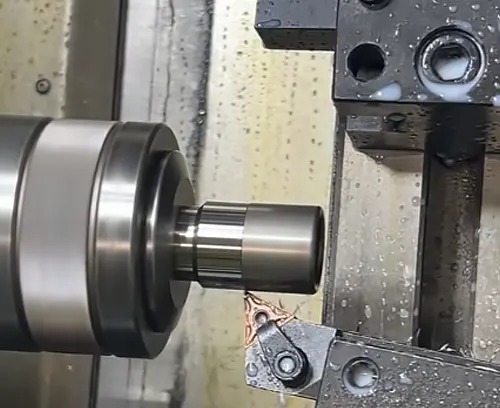
CNC turning is a machining process that utilizes a cutting tool to remove material from a rotating workpiece, creating cylindrical parts with intricate details.
This process is controlled by a computer numerical control (CNC) machine, which ensures precise and repeatable results. CNC turning is widely used in industries such as aerospace, automotive, and medical, where highly complex components are required.
Responsibilities of a CNC Turner
As a CNC turner, your primary responsibility is to set up, operate, and maintain CNC turning machines to produce high-quality components according to engineering drawings and specifications.
Some of the key tasks involved in this role include:
- Reading and interpreting engineering drawings
- Selecting the appropriate cutting tools
- Setting up and calibrating CNC machines
- Monitoring the machining process
- Inspecting finished parts for quality and accuracy
- Maintaining equipment and performing routine maintenance
Skills and Qualifications
Being a CNC turner requires a combination of technical skills, expertise, and attention to detail. Some of the essential skills and qualifications for this role include:
- Proficiency in reading and interpreting engineering drawings
- Knowledge of cutting tools and machining processes
- Experience with CNC programming and operating software
- Strong mathematical and problem-solving skills
- Attention to detail and accuracy
- Ability to work independently and as part of a team
Workflow of a CNC Turner
As a CNC turner, your day-to-day workflow will typically involve the following steps:
- Reviewing the engineering drawings and specifications for the part
- Selecting the appropriate cutting tools and materials
- Setting up the CNC turning machine and loading the workpiece
- Programming the machine to execute the desired machining operations
- Monitoring the machining process and making adjustments as needed
- Inspecting the finished part for quality and accuracy
- Maintaining the machine and performing routine maintenance
Challenges Faced by CNC Turners
Working as a CNC turner in a manufacturing environment can present various challenges. Some of the common challenges faced by CNC turners include:
- Ensuring the accuracy and precision of the machined parts
- Dealing with complex geometries and tight tolerances
- Adapting to rapidly changing production schedules
- Troubleshooting machine issues and programming errors
- Keeping up with advances in CNC technology and machining techniques
Conclusion
In conclusion, a CNC turner plays a crucial role in the manufacturing process by producing high-quality components with precision and efficiency.
By reading and interpreting engineering drawings, selecting the appropriate cutting tools, and programming CNC machines, CNC turners help bring design concepts to life.
With the right skills, qualifications, and experience, CNC turners can contribute to the success of a manufacturing operation and help drive innovation in the industry.